
Clints Quarry Nature Reserve
Clints Quarry is a small nature reserve and Site of Special Scientific Interest (SSSI) about 1 mile north of Egremont in West Cumbria.
The history of the quarry goes back to the early 1600s when the the carboniferous limestone rock was used for building and agriculture, and more recently the quarry supplied the limestone for use in the local steel-making industry during the peak of the acid Bessemer process between 1850 and 1900 and the site included lime kilns to dry and process the limestone. Quarrying finally ceased in 1930 and the land was left until it was purchased in 1984 from British Steel and Lord Egremont by Cumbria Wildlife Trust.
Clints Quarry is a fascinating place not only for wildlife, but for the geology and industrial archaeology including the well preserved lime kilns, which is still noticeable across the nature reserve. The site contains a variety of different habitats from damp marshes, grasslands, forest and water features, both natural and man-made.
The north face of the quarry features the impressive limestone cliffs of the quarry face, rising some 20m or more from the quarry floor. The crack and ledges in the quarry face provides nesting sites for crows and jackdaws as well as kestrels and peregrine falcons.
The damp conditions between the lime spoil heaps are ideal for northern marsh and common spotted orchid, whilst the drier slopes of the heaps include wild strawberry, oxeye daisy, mouse-ear-hawkweed, carline thistle, rough hawkbit and pyramidal orchid. Bee orchids are also found here at one of the most northerly sites in England. The sheltered quarry floor Is home to a profusion of flowers and grasses, providing an ideal habitat for butterflies and throughout the summer you can find common blue butterflies, orange tip, gatekeeper, ringlet, and meadow brown butterflies.
There are four ponds on the nature reserve and frogs and toads breed here and also palmate newt, stickleback and pond snails. Two of the ponds are concrete structures containing deep water that were used in the lime production process while the other two are more natural, created as water collected in the old railway sidings
The eastern part of the nature reserve is already wooded providing habitat for a range of typical woodland birds, and further trees, shrubs and scrub are becoming established in the quarry floor itself.
The Walk
The entrance to the site is from the minor road at Wood End, off the A5086 between Cleator and Egremont. Parking is available for approximately 4 or 5 cars in lay-bys along the road. The path can be quite wet and muddy so suitable footwear should be used. Pass through the cutting and bear right over the small stream and you soon arrive at the quarry floor. I chose a bright sunny frosty morning to reduce the bogginess of the ground as much as possible.
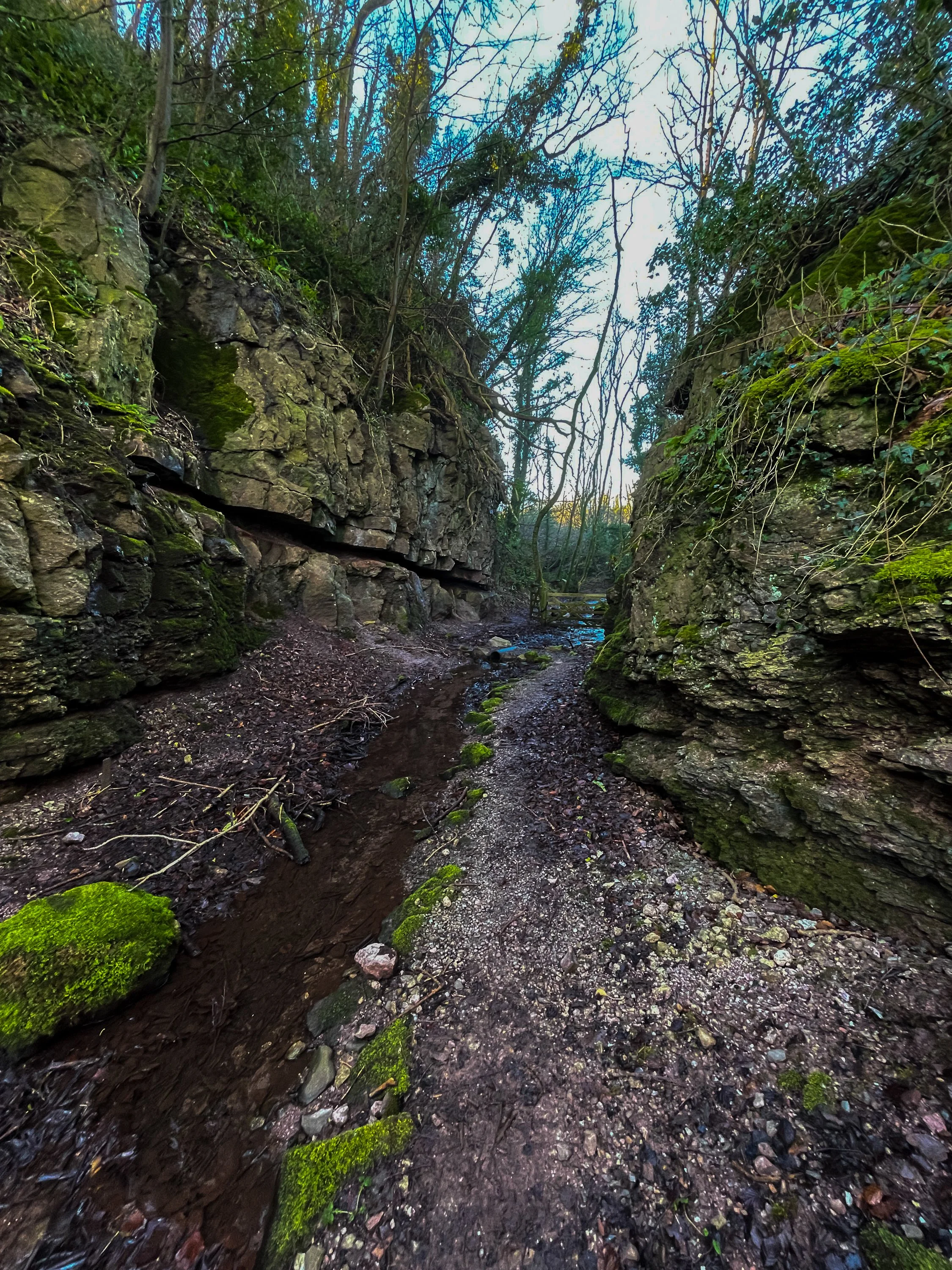
The entrance cutting from the public road
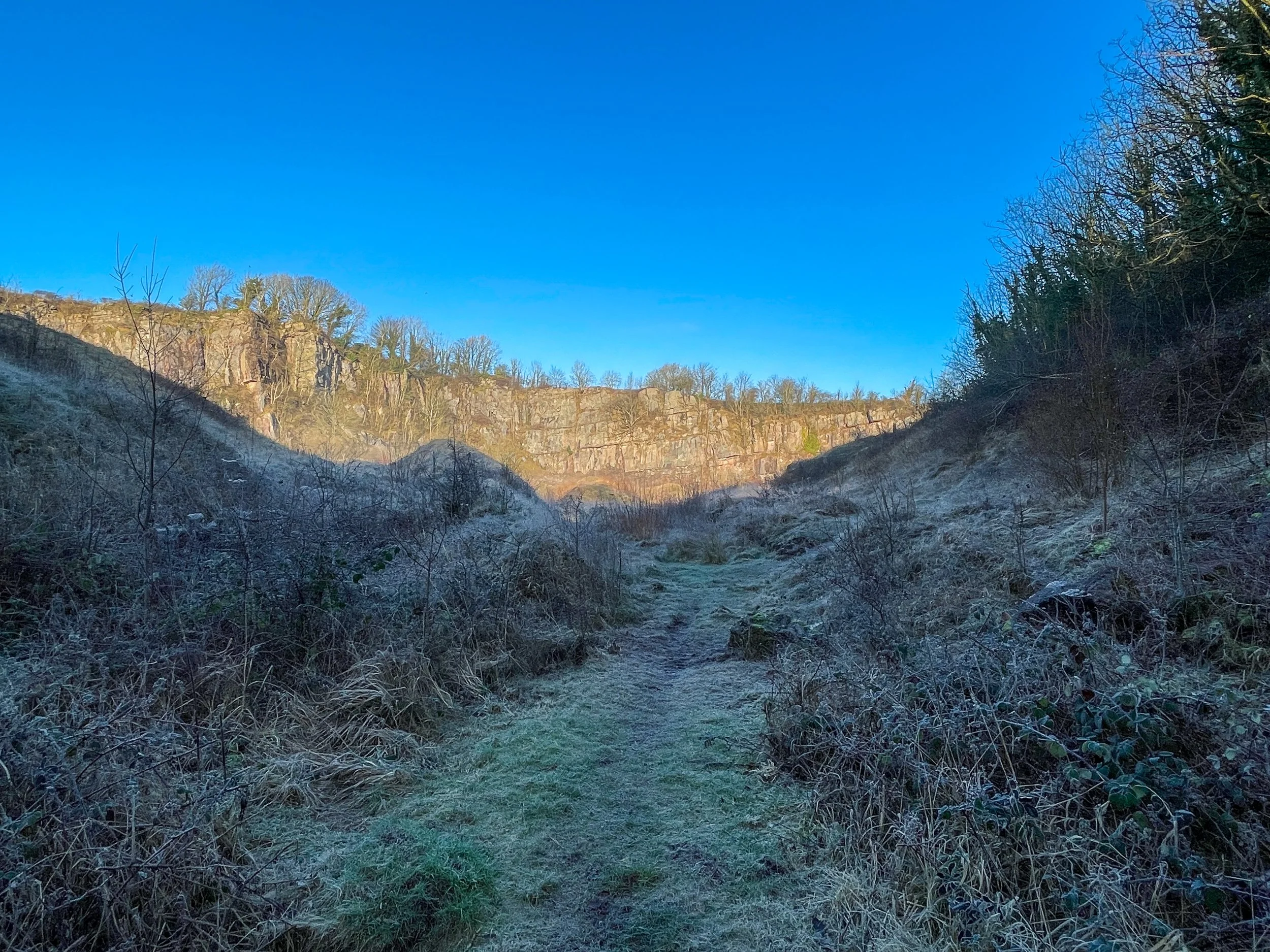
The path soon opens up to the quarry floor, with raised mounds of the spoil heaps
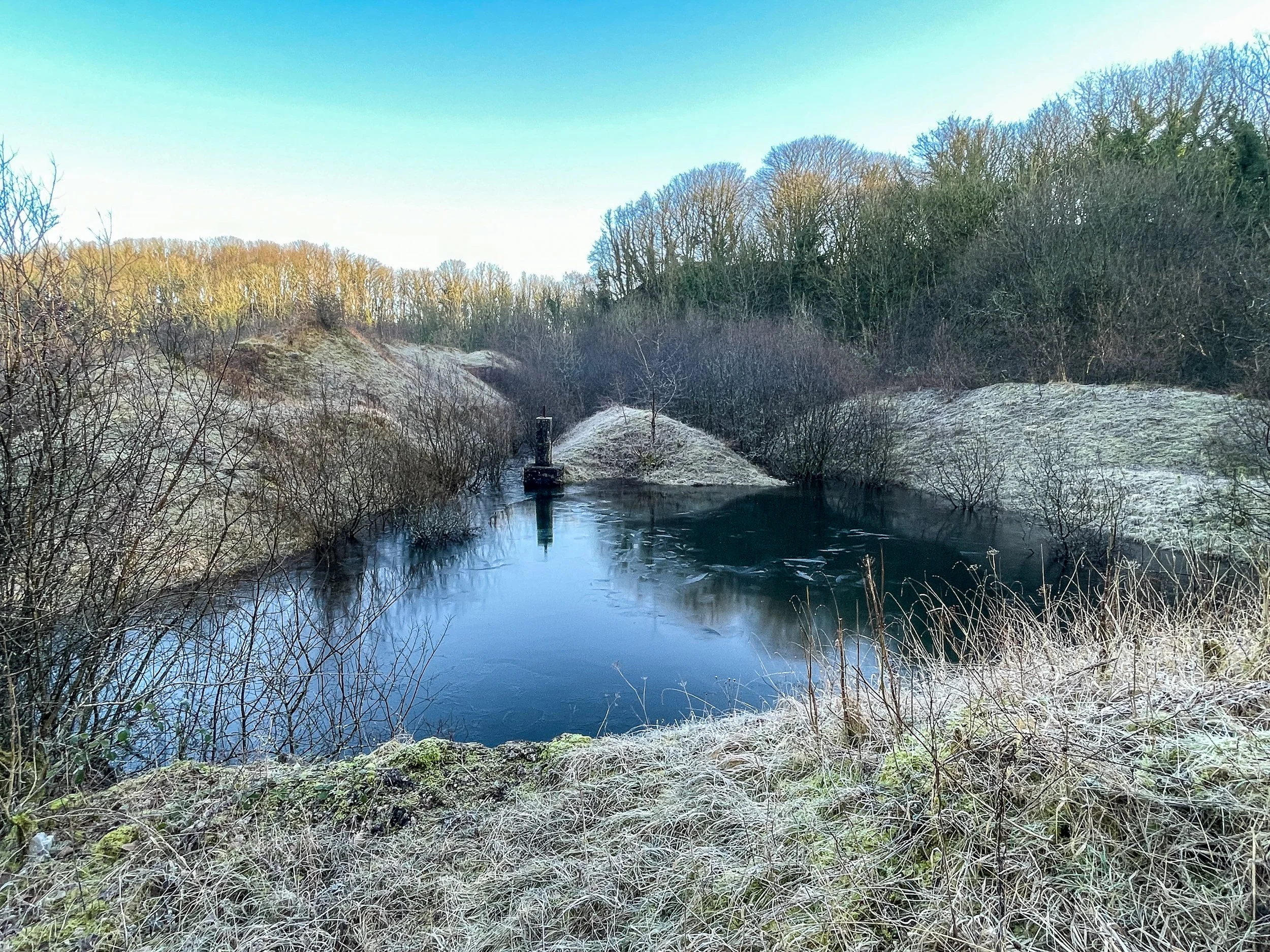
There are numerous paths through the quarry and I decided to take a counterclockwise stroll around the outer edge of the area. One of the first features you come to are the two concrete ponds. These are home to a mixture of amphibians and aquatic animals but at the time visited they were completely frozen over. A return trip later in the year is definitely called for. The ponds are quite deep so are fenced off for wildlife (horses and sheep are often grazed in the quarry) so care should be taken around the area.
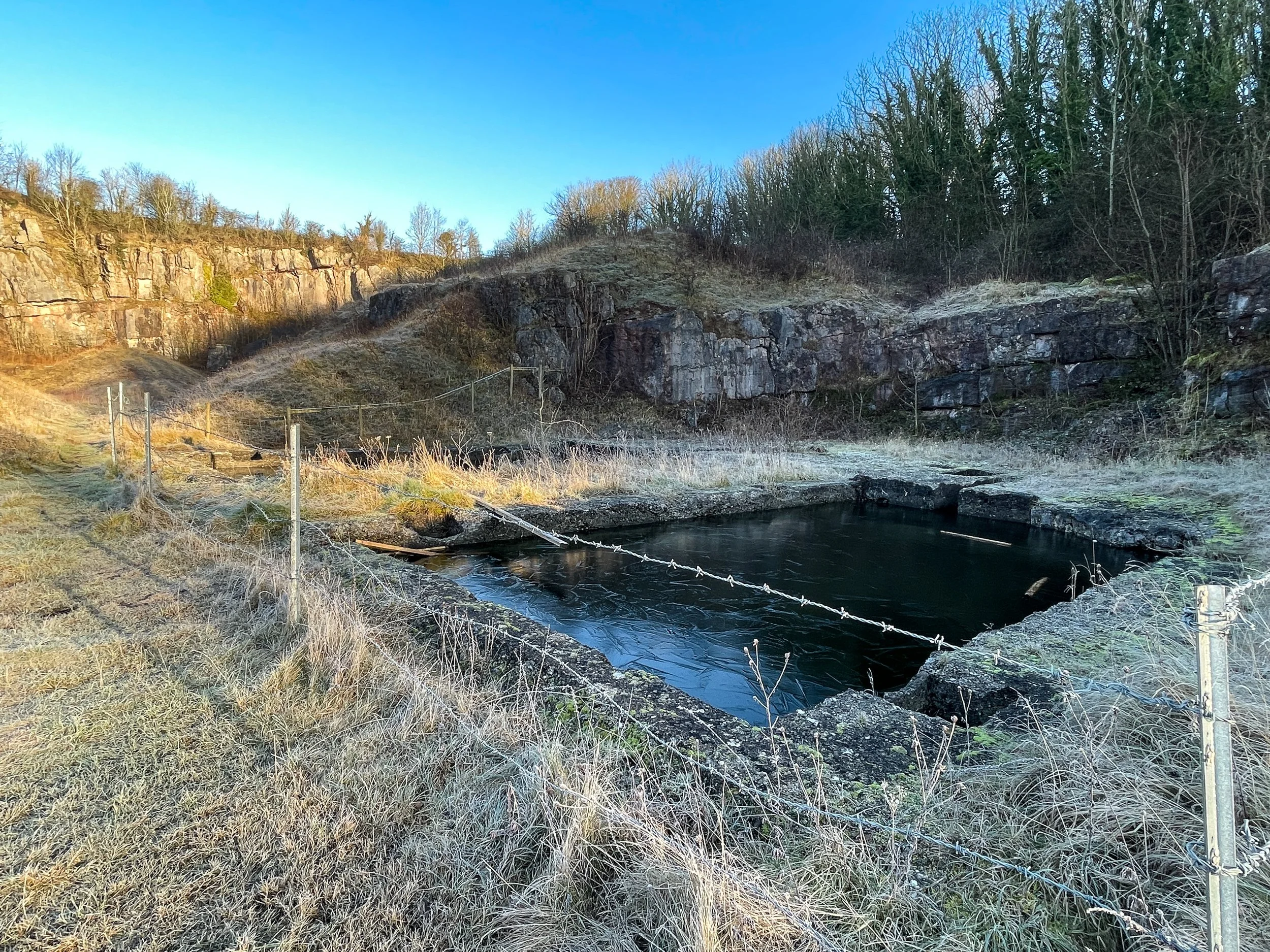
The concrete storage ponds
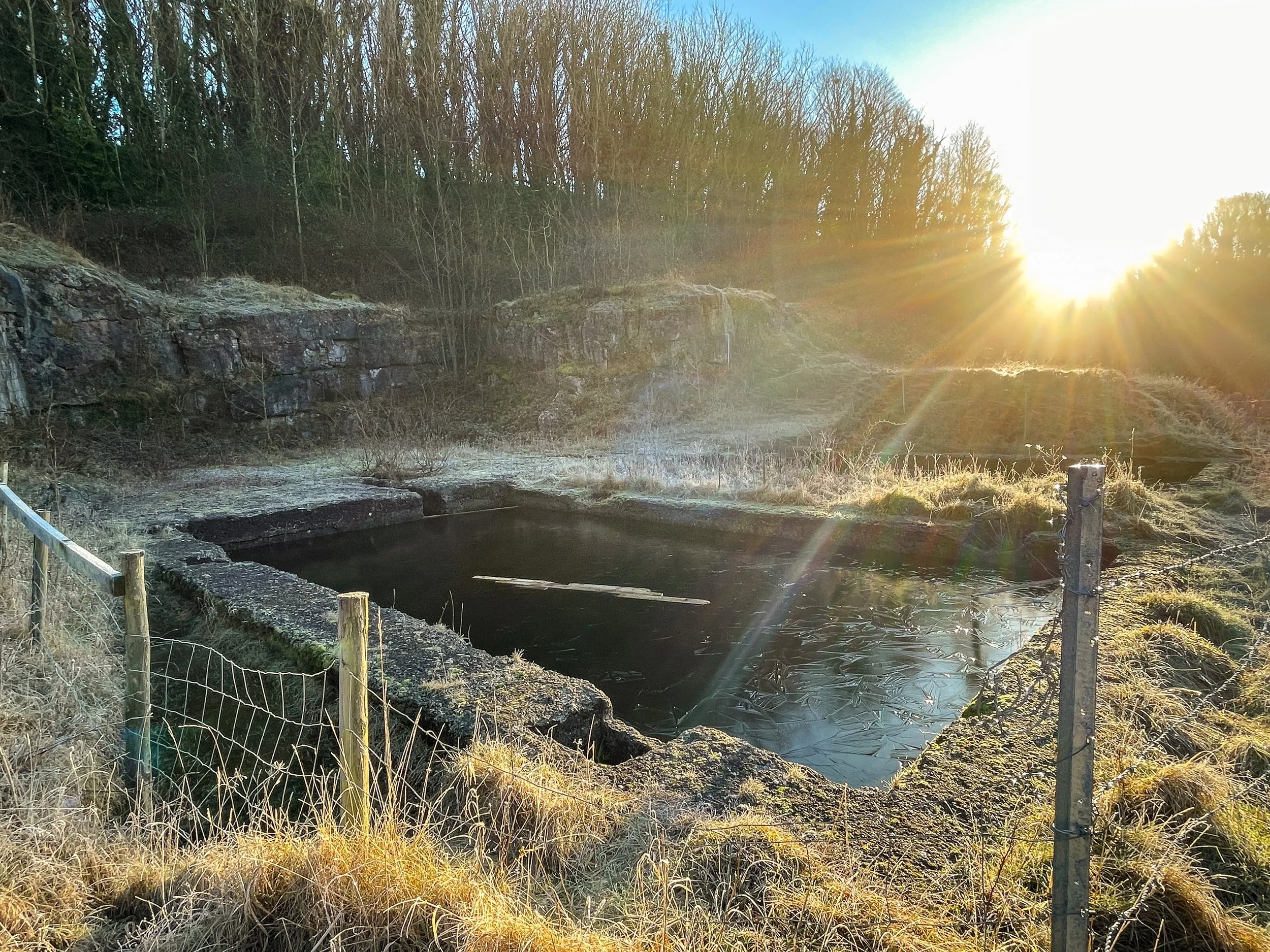
Continuing on past the pons you come to the main quarry floor, strewn with spoil heaps and boulders and leading to the main quarry face. This series of 20m tall rock face is home to a variety of birds including some birds of prey. On my visit there were numerous jackdaws and blue tits flitting around along with an impressive looking Peregrine Falcon and a pair of Kestrels starting to nest on a ledge in the quarry face. The fallen boulders are said to contain numerous fossils which would be ideal for some close up investigation.
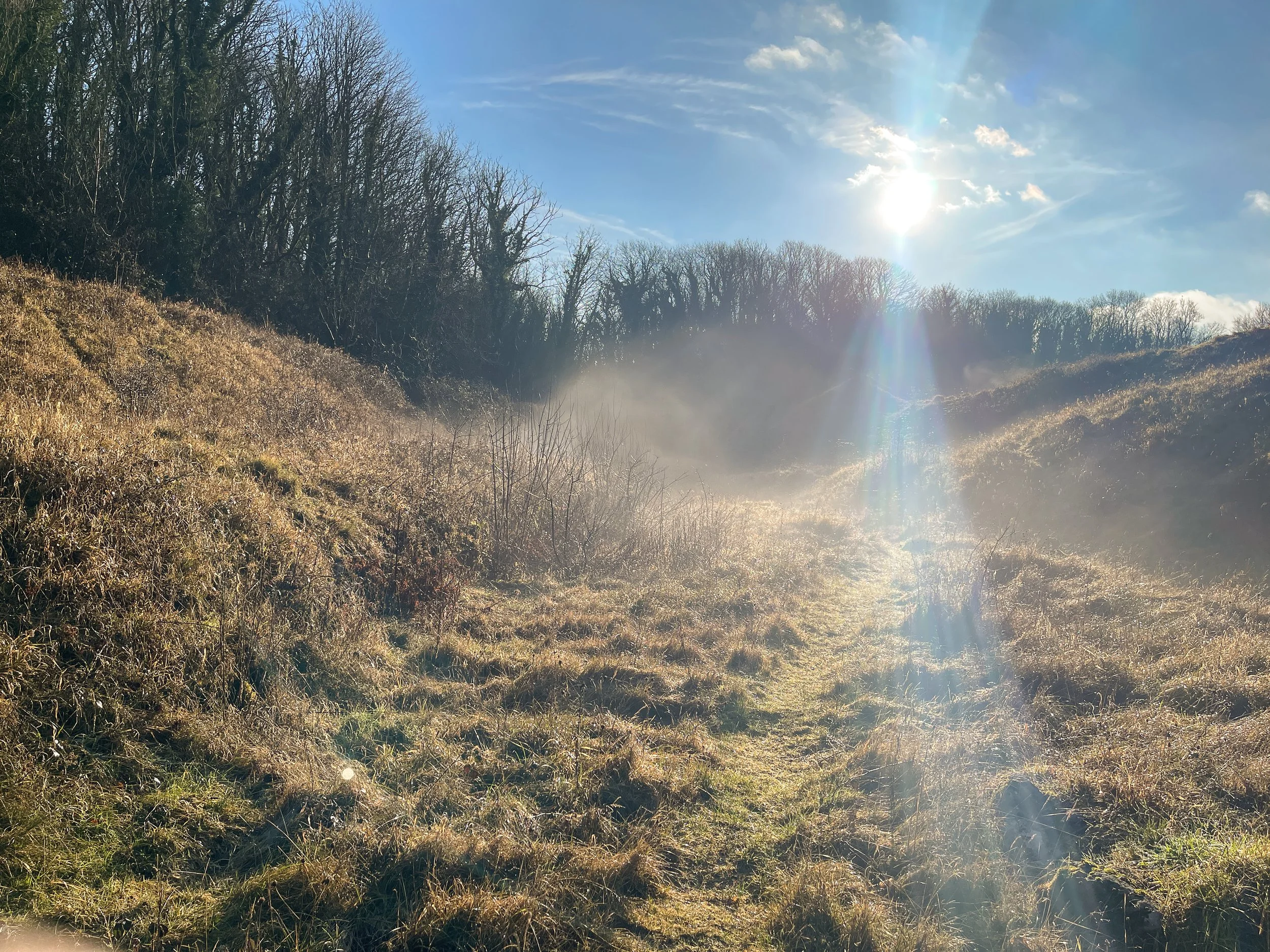
Entering the Quarry floor
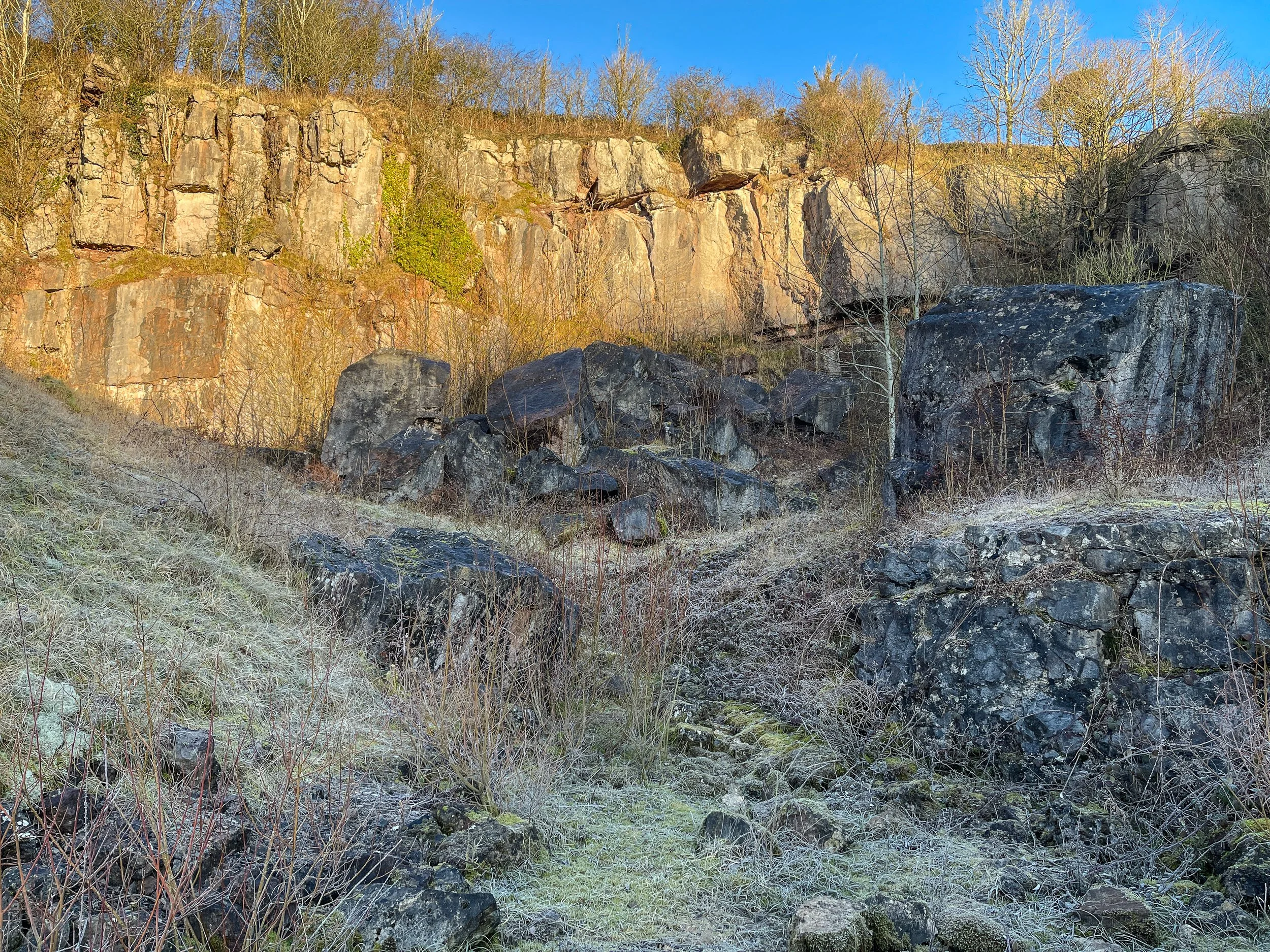
The Quarry Face
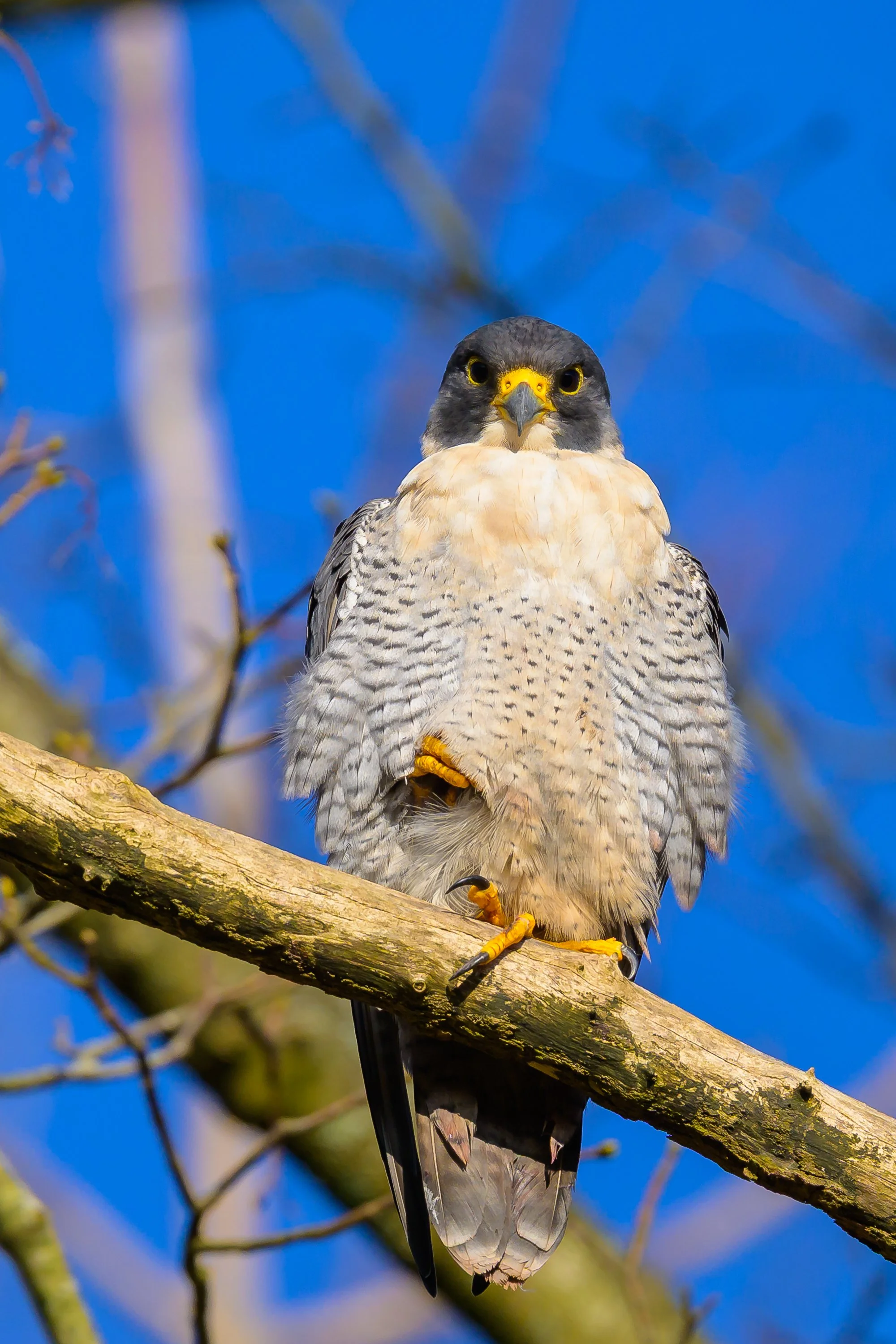
Peregrine Falcon watching from the quarry face
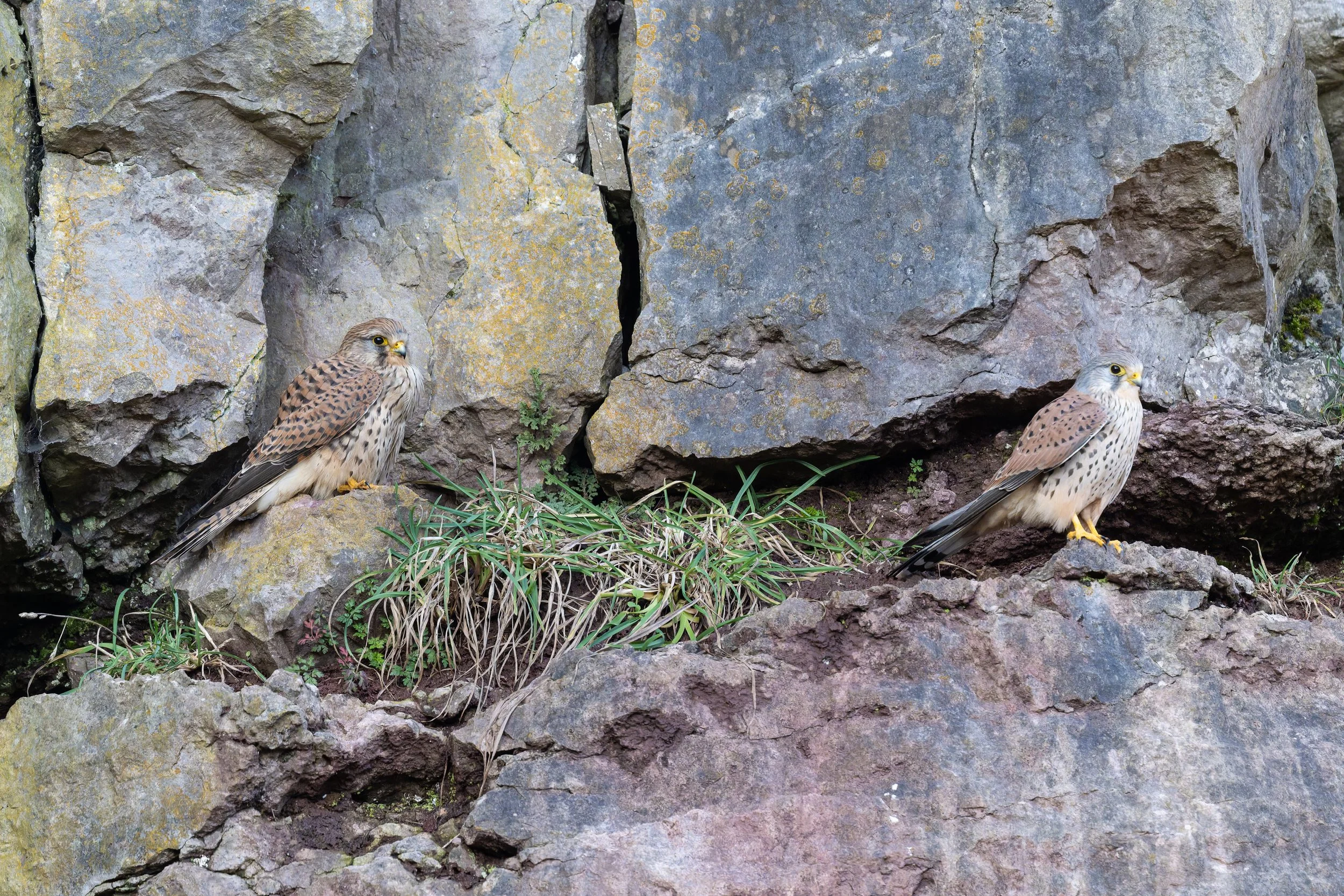
A pair of Kestrels starting to nest on a ledge in the quarry face
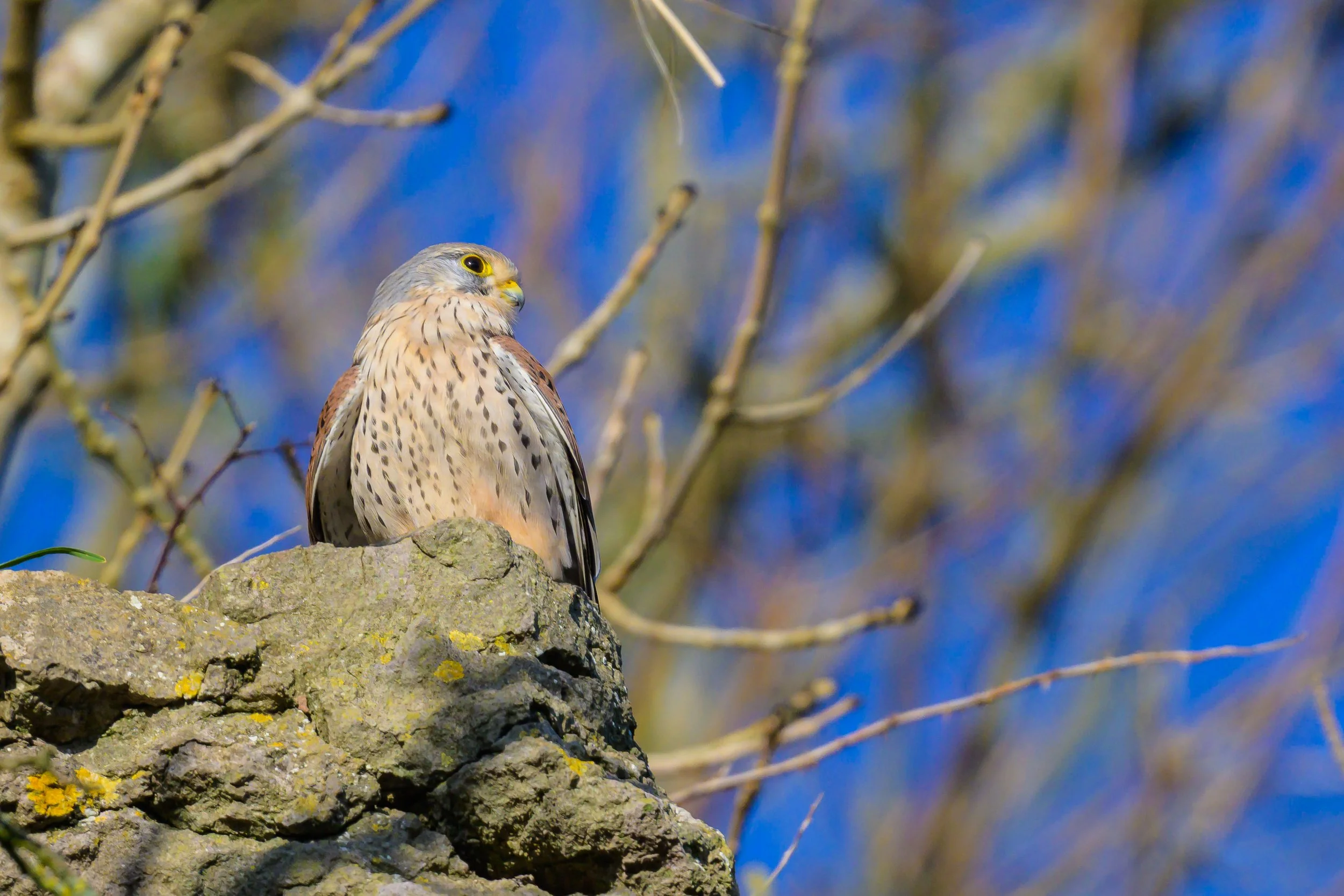
Another Kestrel watching from the quarry face
Further round the circuit the walk becomes more undulating over the spoil heaps but the path is generally well maintained although boggy in places especially after wet weather.
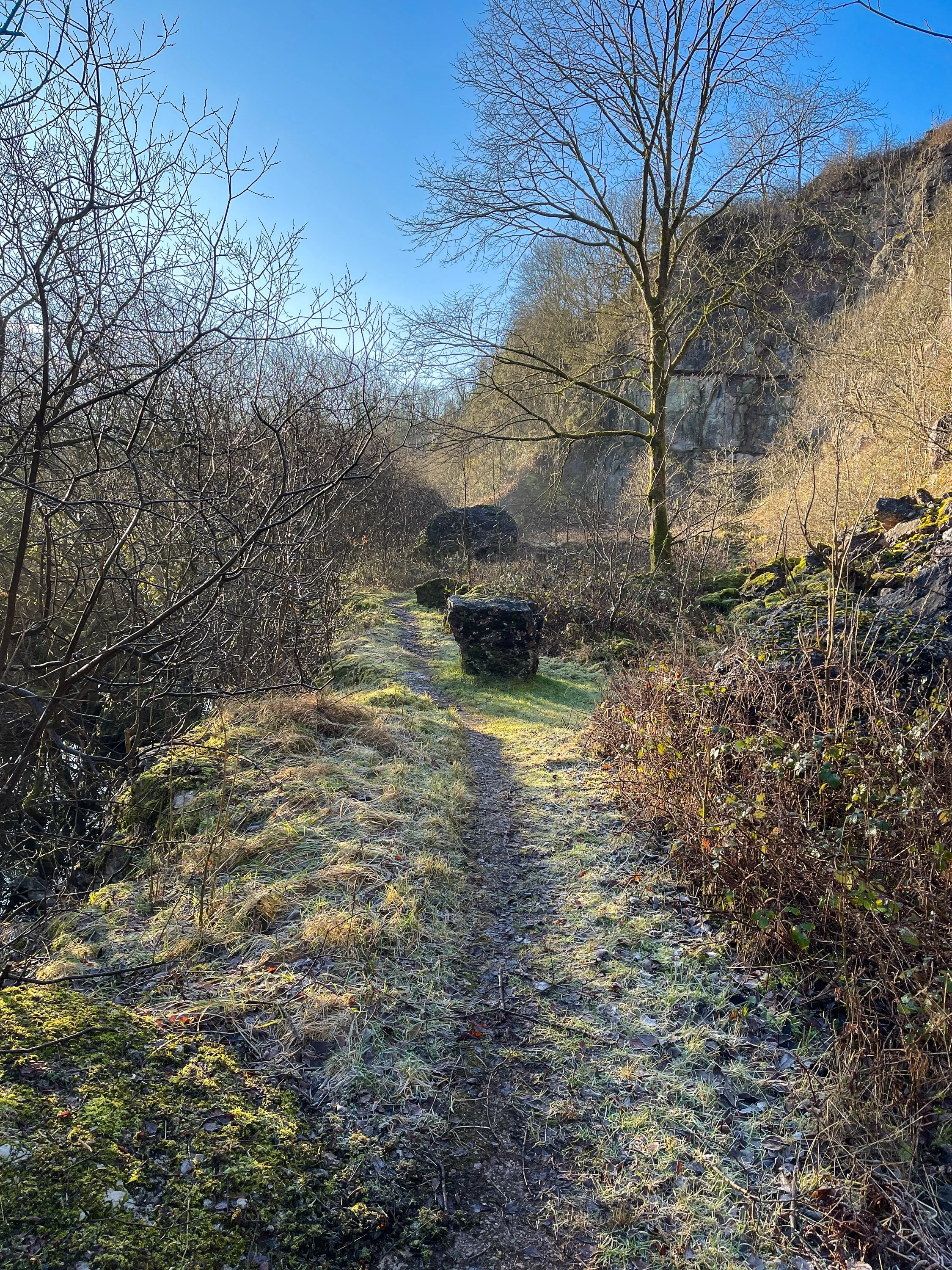
The path continues along the base of the quarry face
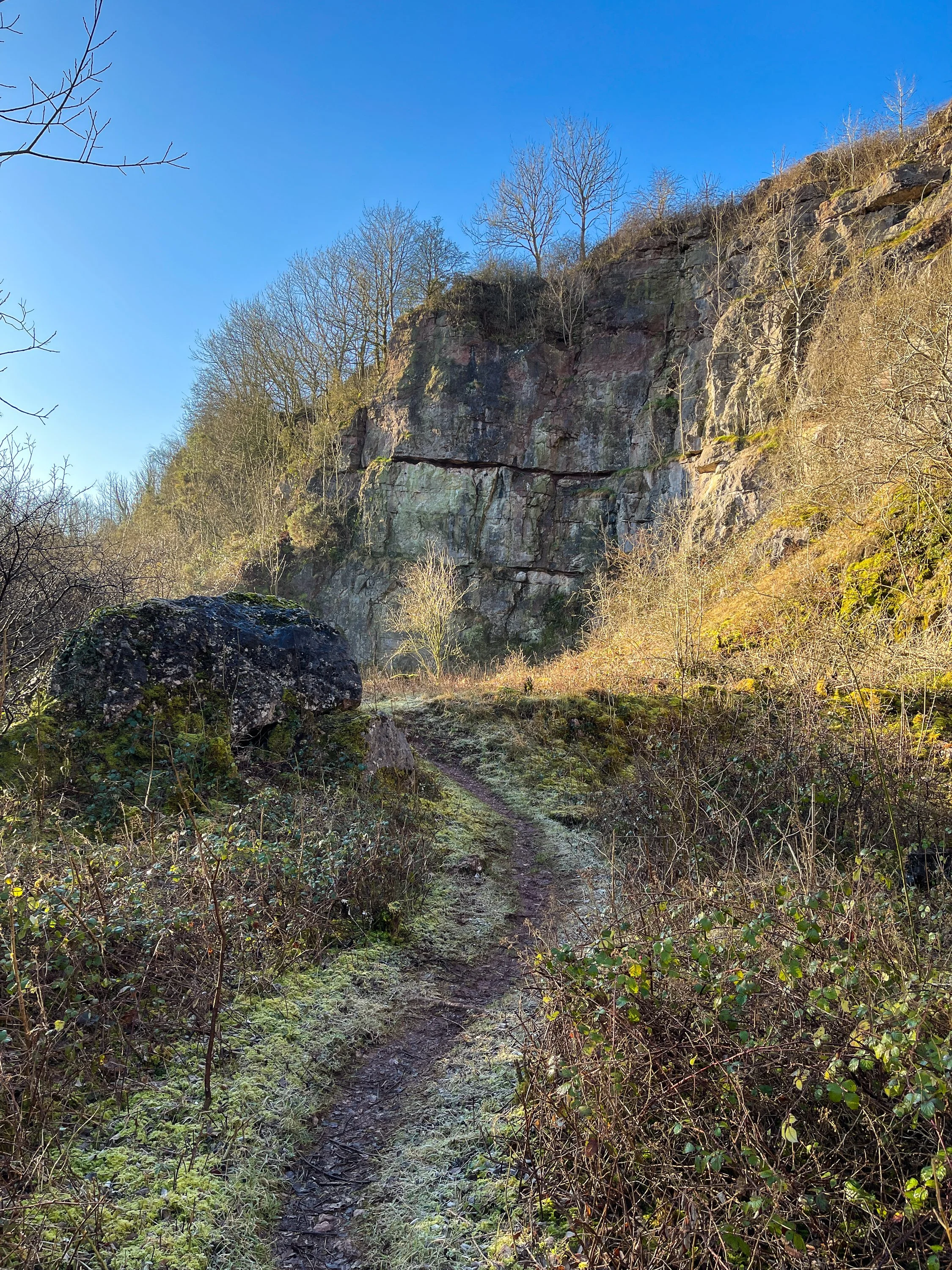
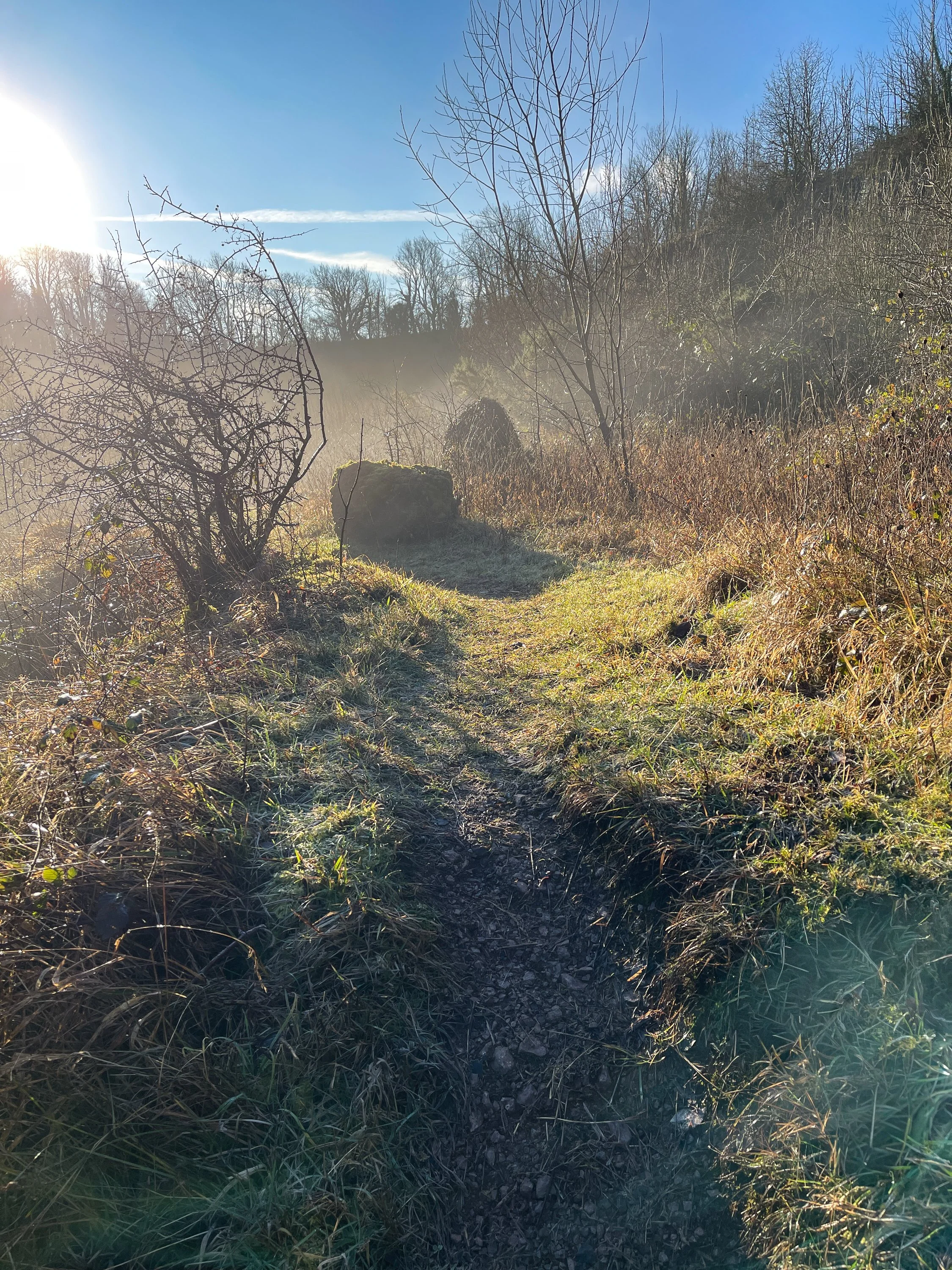
The base of the quarry face provides a number of small trees and shrubs including willow that were full of blue tits

Blue tits in the willow trees at the base of the quarry face
Soon you arrive at the other two ponds formed as water filled the old railway sidings. Again these are home to a wide variety of animals, birds and flora, but had completely frozen over the cold winter weather.
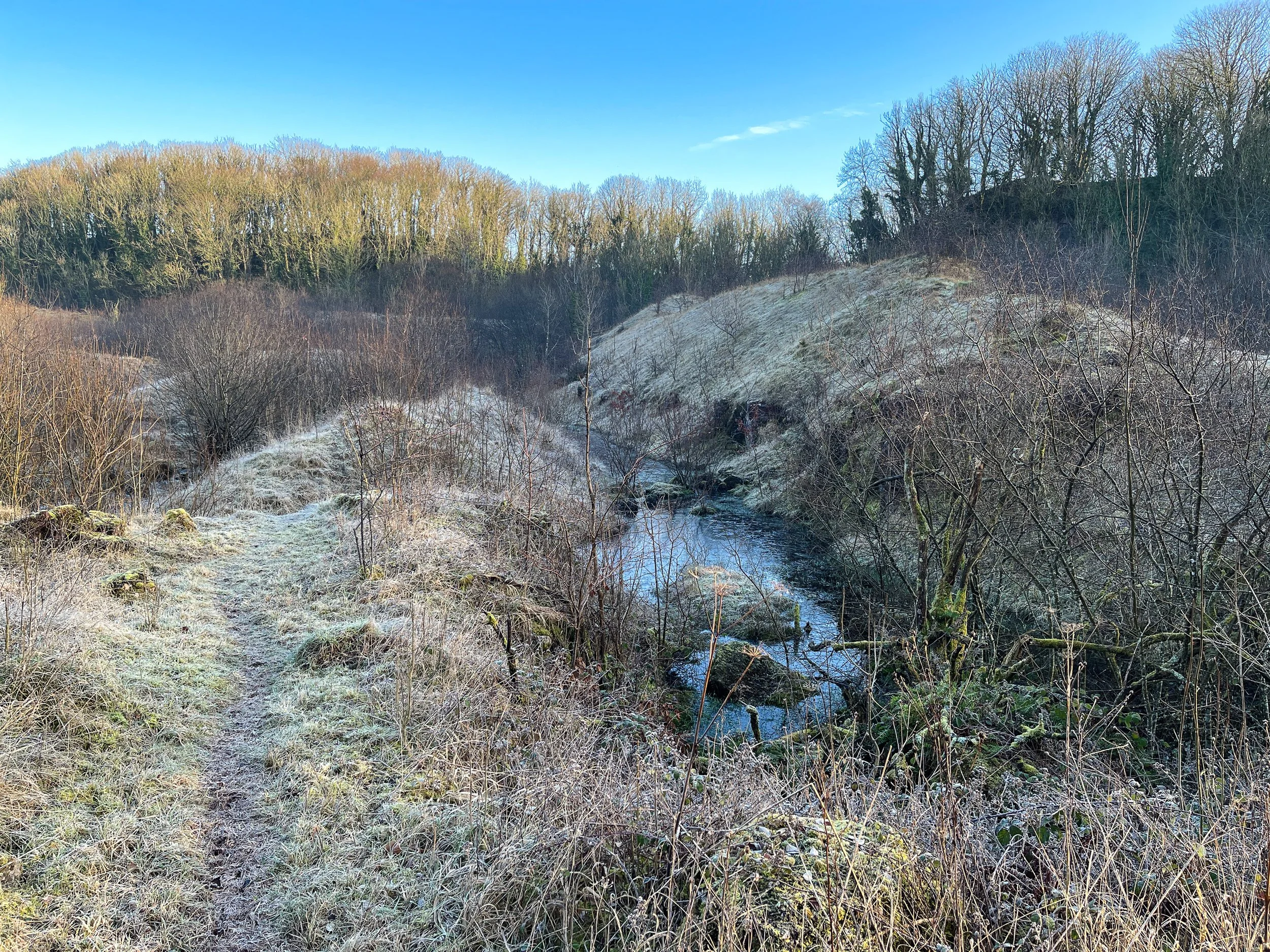
Two further ponds on the quarry floor where water has naturally collected in the railway cuttings
Walking past the ponds you start to get into the wooded area as the path curves around to take you back to the starting point. Along the way there are numerous branches taking you deeper into the woods. As the woods were quite dark I decided to save this for another visit.
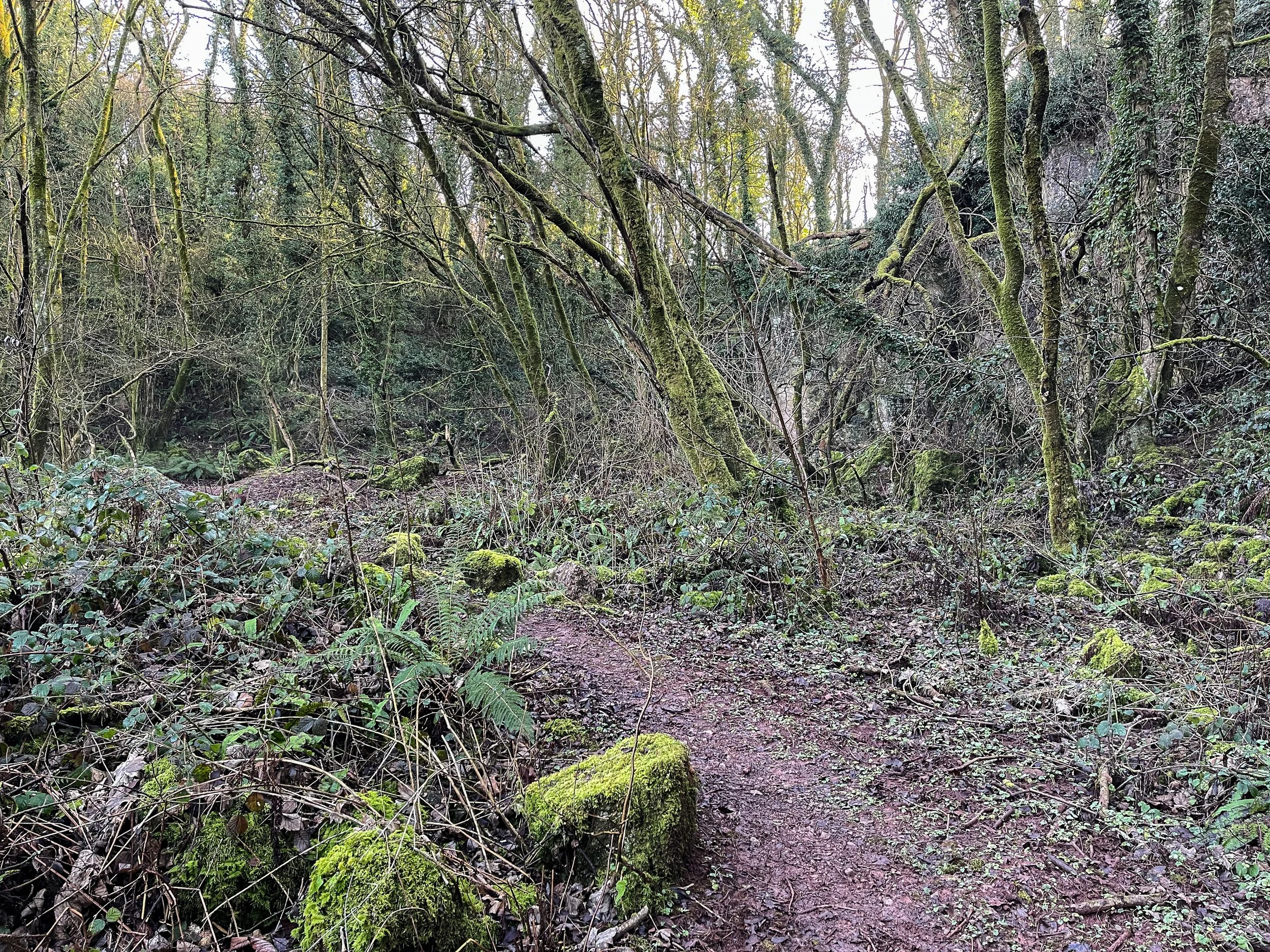
Entering the woodland area
Getting There:
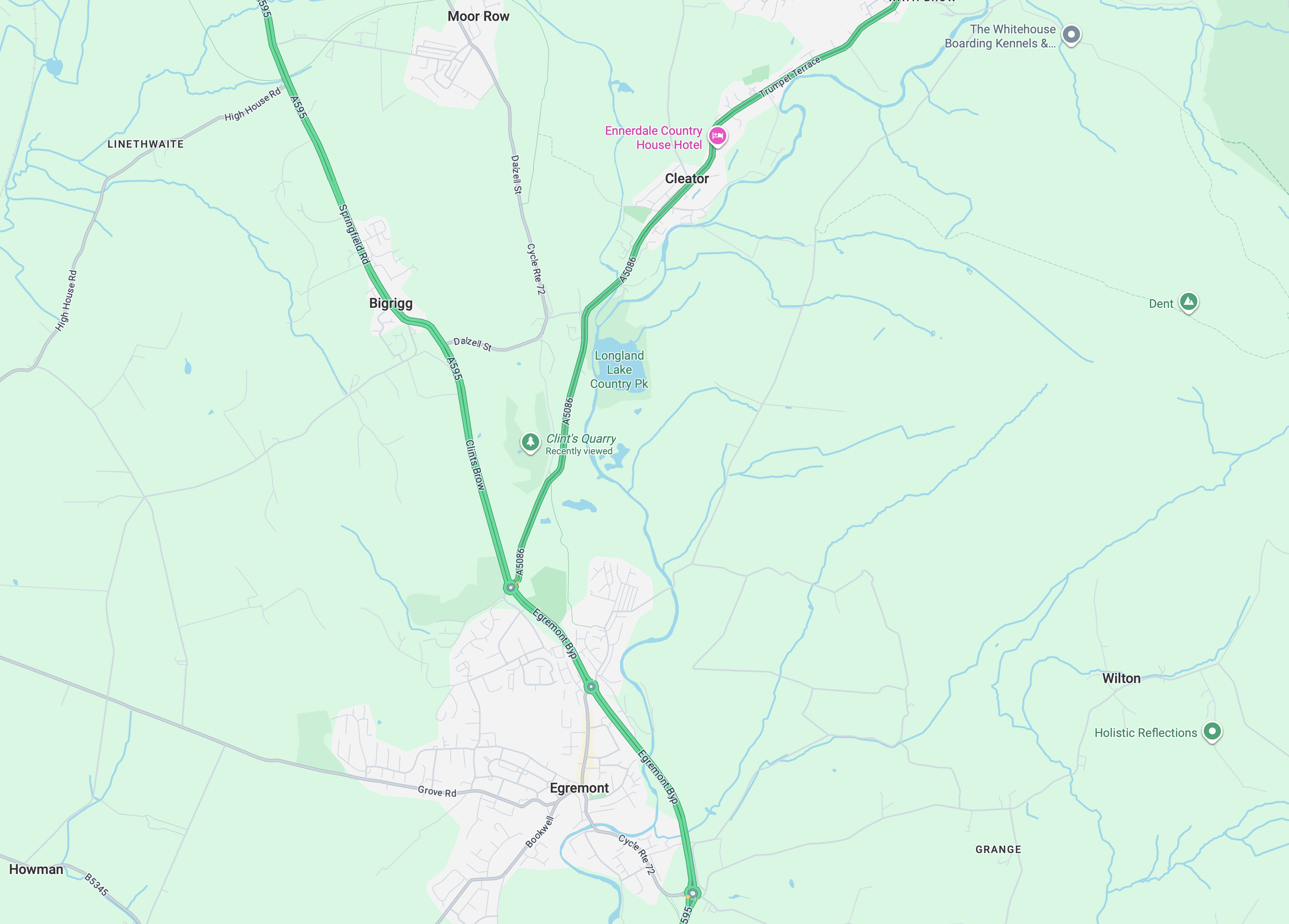
The nature reserve is accessed from the A5086 between Cleator and Egremont and is on the route of National Cycle Network NCN72 - Hadrian’s Cycleway. From Egremont take the A5086 towards Cockermouth and just before the disused railway bridge turn left onto the small road towards Wood End. There are two small lay-bys, the first on the right near the cycle path, and a further one a little further along opposite the entrance to the reserve.
Grid Ref NY 008 124
What3Words: consumed.autumn.trash